Search more

Thursday, June 25, 2009

iPhone Owners, Beware! (Of Iffy iPhone Studies)

iPhone Owners, Beware! (Of Questionable iPhone Studies)BREAKING NEWS: Your Apple iPhone is bound to break! At least, if you believe a new study by an electronics warranty company that, by pure coincidence, happens to be promoting an iPhone warranty plan on its home page right now. Breaking news? Broken news might be more like it, as far as I'm concerned.

The report, conducted by warranty seller SquareTrade, made its way into the blogosphere this week and has been steadily building buzz on Twitter ever since. It claims that Apple's iPhone is "prone to accidental damage," seemingly implying (though never directly asserting) that the iPhone may be more likely to break than its smartphone competitors.

Don't fall for the attention-grabbing headline, though: There's far more to this "resea
rch" than meets the eye.

When iPhones Fail

The SquareTrade study (PDF) starts, soundly enough, by comparing the iPhone 3G to the BlackBerry and the Palm Treo. The company claims that, over a 22-month period, the iPhones it tracked experienced far fewer hardware failures than the other mobile devices. Only 9.9 percent of iPhones malfunctioned during that initial two-year timeframe, SquareTrade says, while 15.3 percent of BlackBerrys and nearly 20 percent of Palm Treos had hardware issues.

That sets the stage for the remainder of the sales pitch -- er, sorry...study. Brace yourself.

When iPhone Research Fails

SquareTrade goes on to claim that "while the iPhone hardware experienced relatively few malfunctions, the real problem with iPhones [are their] susceptibility to failures from accidents." More than 20 percent of all iPhone users, the company says, experience some sort of accidental damage to their device -- leading to a "projection" of any iPhone owner having a 33 percent chance that their device will die within two years of its purchase.

Oddly, the comparisons to other devices end here; SquareTrade doesn't actually ever say how the BlackBerry or Palm Treo fared when it came to "susceptibility to failures from accidents." Sure, the iPhone is "especially susceptible to dying from drops, whether on hard surfaces or into liquids" -- but is it any more so than any other small, sleek electronic device with a glass screen? Could other phones be dropped or watered without incident?
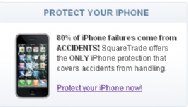
This omission, I'm sure, has nothing with to do with the fact that the iPhone is the only smartphone prominently featured on SquareTrade's home page for warranty sales. It also, I'd imagine, has no relation to the following highly scientific conclusion of the company's "research":

"As the cost to replace iPhones is high, prospective iPhone owners should consider this potentially hidden cost before they buy, or seek other ways to alleviate the cost of replacement, such as buying an extended warranty that covers drops and water immersion."

SquareTrade, according to its home page, is the only company offering an iPhone warranty that covers handling-related accidents. You know, things like drops and water immersion.

Intel and Nokia to Rattle Mobile Landscape

Intel and Nokia to Rattle Mobile LandscapePlenty of questions linger regarding Intel and Nokia's partnership, but one thing we can count on is the two powerful tech players will rattle the mobile landscape. The Intel and Nokia partnership, announced yesterday, was slim on specifics but brimming with potential as both announced they would collaborate on a mobile-computing partnership.

The duo has the very real potential to shower consumers with dozens of shiny new Nokia and Intel products from super-smart smartphones that transmit voice and data at lightning speed and efficiency or something like a hybrid netbook/notebook that fits in your shirt pocket.

We will have to wait and see what becomes of the partnership because both executives from Intel and Nokia were mum on what type of gizmos we will be seeing and when. While the brunt of the announcement focused on explaining how both would deliver a new mobile platform, such as Mobile Internet Devices (MIDs), it's what was not said that may generate the most interest and should have Apple, AMD, and other mobile players interested.

Intel Partners Scratch Heads

While Intel and Nokia skimped on specifics, left dangling in the wind are questions about how this announcement will impact Intel's relationships with other companies it has longstanding relationships with. For example, Intel has made significant inroads with Apple, where many of its Macintosh computers are based upon Intel CPUs - will an Intel powered Nokia iPhone competitor strain Apple's relationship with Intel? Concerns should also surround Intel's relationship with Microsoft - will an Intel powered Nokia MID running Android or Linux impact Microsoft's sales of Windows Mobile?

Nokia, Intel Marriage: Jealous?

One thing is certain: Intel may be taking a big risk with its dive into the mobile wireless device market with Nokia. Intel has to be careful not to upset its current partners, yet still work with Nokia to deliver new and impressive devices to consumers. Perhaps, the biggest winner here will be AMD, which has already made inroads with Gateway into the netbook market and is poised to challenge Intel in the low cost computing arena.

If They Were Smart . . .

Still more questions remain about WiMax and alternative operating systems (Android and Linux). The smart move for both companies would be to quickly introduce a MID that shouts innovation. That innovation could come in the form of integrating WiMax into an Android based tablet, which can switch between various wireless modes, while providing the features of a Kindle and iPhone combined, add Bluetooth for a headset and viola, the companies would have something that could compete against netbooks, Kindles and iPods.

Together Intel and Nokia have the technology to make this happen. Nokia has already unsuccessfully dabbled with tablets and Intel already has experimented with cellular phone technology, so both companies have the background to make something happen quickly, and to become masters of the wireless market. Unfortunately, both companies may have to tick off some of their existing partners, at least a little, to seize the day and make this new relationship deliver something significant.

Is a $99 Palm 'Eos' in the Works to Challenge Apple?

Here's a blurry rendering of the Palm Eos from the guys over at Engadget
The Palm Pre may have just debuted at $199 (after rebate), but a cheaper, smaller Palm smartphone may be just around the corner. According to Mike Abramsky, an analyst for RBC Capital Markets, Palm will launch its $99 Pixie -- or perhaps it'll be named the Eos -- as early as Q4 2009.

Rumors of the Pixie/EOS have been circulating for months, and some reports predict the phone will resemble the popular Palm Centro with a touchscreen and a physical keyboard. A shrunken version of the Pre is unlikely, however, without some major design changes. In her review of the Pre, PC World's Ginny Miles praised the phone's interface and touchscreen, but was less than thrilled with its physical keyboard:

"Unfortunately, Palm seems to have sacrificed keyboard usability in the interest of compactness. While I appreciated having a physical keyboard, I disliked the design . . .The keys weren't too tiny for my small hands, but some of my colleagues found them quite cramped."

Another option for a future Pre: Palm could ditch the slide-out keyboard and replace it with a touchscreen version, a la the Apple iPhone. (Today's Pre lacks a touch keyboard.) Certainly, the Pre's best feature is its webOS operating system, which Palm will likely port to other Web-enabled devices next year, Abramsky believes.

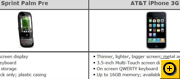
Whatever Palm has up its sleeve, it definitely needs a webOS-enabled smartphone to compete with the iPhone 3G. Aggressively priced at $99 and featuring Apple's slick iPhone 3.0 software update, the 3G is arguably the best smartphone value on the market today.

Go to jbertolucci.blogspot.com for links to Jeff Bertolucci's PC World blog posts.

Monday, June 22, 2009

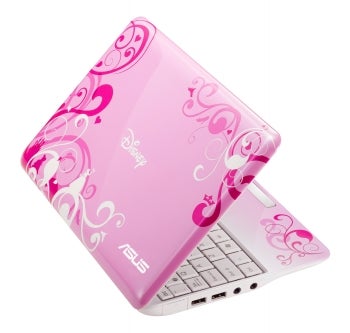
Asus and Disney Join Forces on Kid-Friendly Netbooks

Add this to the list of unexpected business partnerships: Asus and Disney have combined their expertise in computers and cartoons to produce a Disney-themed netbook called the Netpal. Available in "Princess Pink" or "Magic Blue," the Netpal will be available in late July.

The Netpal should be perfect for the Disney fans who need a laptop that packs a little more punch than the $30 Vtech Disney Princess Carriage "Laptop" and just aren't feeling the Snow White look of the older Lenovo IdeaPad Y330 Disney Limited Edition.

The Netpal will be sold by Toys ‘R' Us, DisneyStore.com, and Amazon.com for $350, which will get you a 2.6-pound laptop with 1GB of RAM, Windows XP Home, an 8.9-inch display (1024-by-600 resolution), and a 1.6GHz Intel N270 processor.

There will be two models available: one with a 160GB HDD, and one with a 16GB SSD (the latter will be about half a pound lighter), and both will come with SD/MMC card readers, a 3-megapixel camera, a VGA port, and three USB ports.

The Netpal also comes with a handful of preinstalled themes inspired by Disney and Disney/Pixar movies, including Cars and Vintage Mickey Mouse (as well as Hannah Montana and Jonas Brothers themes for the more-mature Disney fan). There's also plenty of Disney-specific software that comes with the Netpal, so if you're having a hard time finding Hannah Montana on Pandora, you might have better luck with Disney Radio.

For parents who balk at buying a $350 PC for children on a toy-breaking streak, the Netpal's design may give them some peace of mind: it packs a spill-proof keyboard and is protected against data loss from impact by Asus ShockShield technology.

It also has plenty of parental control options; parents can restrict their children's access to particular sites or programs, limit e-mail correspondence to certain addresses, set different permissions corresponding to different scheduled times (sorry, Junior -- no Internet after 8 p.m.), and even provide statistics on what users are doing online. You can also figure out how much time the kids are spending playing Flash games when they're supposed to be studying.

New Google Phone Expected Next Week from T-Mobile

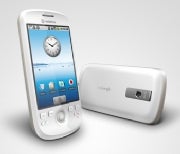
What's smaller than the iPhone and thinner than the G1? It's T-Mobile's second Android-powered phone: myTouch 3G. Or at least that's the rumor, anyway. Next week, T-Mobile is expected to announce a summer launch date for another Android-powered phone from HTC called the myTouch 3G, according to The Wall Street Journal.

The myTouch 3G will have a touchscreen but no physical keyboard, as well as a G1-styled trackball and navigation buttons. But that's where the similarities end; overall, the new Android phone will reportedly resemble the HTC Magic, currently available in the

htc magic android U.K. In fact, the myTouch 3G could simply be a renamed version of the Magic. Earlier this month, PC World's Daniel Ionescu posited this theory after all attendees of Google's I/O conference received an HTC Magic handset to take home and try out. That free giveaway seemed very generous at the time, but it makes more sense from a marketing viewpoint if the Magic is about to be released in the U.S.

The Journal says the myTouch will have a glossy look with a rounded back that is smaller than the iPhone but thinner than the original Android phone to hit the U.S -- the G1. As for new features, the myTouch 3G could come with voice-activated search and video capability.

This is the third time we've heard about a new Android phone from HTC in the coming months. Just a few weeks ago, rumors were circulating about the HTC Hero launching on June 24, with a big bash planned for London. Based on the rumors, however, the Hero and the myTouch don't sound like the same phone. The Hero is rumored to be coming to AT&T and would also be a touchscreen-only device. A second Hero model may also be in the works, possibly renamed the Lancaster or Memphis, that would come with a keyboard. The Hero is supposed to use HTC's TouchFlo 3D user interface, but there's no word on whether the myTouch would use TouchFlo as well. We've also seen reports about a refreshed G1 coming to T-Mobile called the G2, which could be the same phone as the myTouch 3G.

Google has been saying for some time to expect numerous Android models to hit the U.S. market. The Journal said the search giant is looking forward to seeing around 18 different models this year. Despite these announcements and predictions, so far only the G1 has appeared in the U.S.

But here are some other signs that a new Android model could be hitting store shelves soon. The myTouch 3G is rumored to have a $179.99 price tag with a two-year contract. That's the same price as the G1 -- or at least it was. T-Mobile recently slashed the price of the G1 by $30 to $149.99. Is this a sign that a new Google phone is about to hit the market? I guess we'll have to wait until next week to find out.

Verizon, AT&T: Buy a Texting Plan and We Won’t Rip You Off

Artwork: Chip Taylor
If you're not buying a monthly text-message plan from your wireless carrier, you're getting ripped off. This isn't news, I know, but testimony before Congress this week from the nation's top wireless carriers makes this clear to occasional texters like me who don't want a message bundle.

Representatives from Verizon Wireless and AT&T appeared before the Senate Judiciary Committee's antitrust subcommittee in Washington on Tuesday to address allegations that U.S. wireless carriers are colluding to set prices for text messaging.

The collusion claims have been brewing for months now, and for good reason. The nation's top four cellular providers -- AT&T, Sprint, T-Mobile, and Verizon Wireless -- each charge 20 cents per text message, a rate that's doubled from 10 cents in 2006. However, only users with a pay-per-use (PPU) plan for texting face those steep rates.

Highway robbery? You bet. But apparently the PPU deal is for suckers only. Um, like me.

I did a quick comparison of the lowest-priced text message plans from the four major carriers. They are:

* AT&T: 200 messages for $5 a month (2.5 cents per message)
* Sprint: 300 messages for $5 a month (1.67 cents)
* T-Mobile: 300 messages for $5 a month (1.67 cents)
* Verizon: 250 messages for $5 a month (2 cents)

These estimates assume you're texting up to the monthly limit, of course, which probably isn't the case all the time. But even if you use half your allotted texts, you're still paying a small fraction of the PPU rate.

Am I cheap? Probably. But more importantly, I hate being forced to pay for services I don't want or need, such as 200 to 300 text messages a month. I send and receive maybe 10 to 15 texts a month. So is it fair that my carrier AT&T charges me eight times the bundled rate?

Yes, I know we're talking a few bucks here. So call me cheap. I'm arguing on principle.

According to a prepared statement by AT&T general counsel Wayne Watts, "less than 1% of AT&T's postpaid text messaging volume is handled on a PPU basis. Instead, the vast majority of our customers take advantage of AT&T's multiple messaging pricing plans, including those that provide a package of messages for a flat monthly rate."

So not only am I a sucker, I may be the only one.

Watts also points out that U.S. wireless carriers are "competing fiercely on many levels," and offer consumers a variety of voice and messaging plans. When it comes to texting fees, there's no collusion at all, he claims.

Damn. I just got a text message. Another 20 cents down the drain.
True? It's hard to say. The universal adoption of the 20-cent-per-message fee by the Big Four does look suspicious. Then again, when you've got numerous vendors duking it out in a highly competitive wireless market, collusion seems a lot less likely

T-Mobile Launches Dash 3G

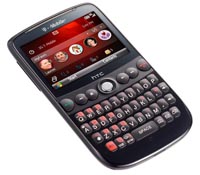
t-mobile dash 3gT-Mobile today introduced the T-Mobile Dash 3G, a long-awaited refresh of its predecessor, which we first reviewed more than two years ago. The Dash 3G joins this summer's hot parade of new cell phones, which began earlier this month with the launch of the Palm Pre and continues this week with the launch of the Apple iPhone 3G S and next week's launch of the second T-Mobile phone with Android. The Dash 3G will go on sale in stores in July.

The new Dash 3G is similar to the HTC Snap (available on Sprint and Verizon). It is the first 3G phone from T-Mobile to use the Microsoft Windows Mobile 6.1 Standard Edition operating system. The handset has evolved from its previous iteration to look sleeker and more smoothly designed. It replaces the previous model's five-way nav button and cluster of small nav keys beneath the display with a trackball and clearly defined, round nav buttons. The QWERTY keyboard appears roomy as well.

More details, including price, to come when available. What is known is that the Dash 3G has a QVGA (320 by 240 pixel resolution) display, integrated GPS, Exchange server support, microSDHC card slot, Bluetooth 2.0, and a 2-megapixel camera. These features are a boost over the previous version, but fall short of some of the beefier specs of phones like the Palm Pre or the iPhone 3G.

Palm Releases First Update to webOS

While it boasts no new apps, Version 1.0.3 of Palm Pre's Web OS features a myriad of little updates, including enhanced e-mail support and faster Google synching. Palm touts "synergy" as one of Web OS's important elements, so it's not surprising that many of the updates focus on quicker and easier synchronization with Google.

Google calendar events with symbols or accents in the name can now synchronize ("Lunch@1:30 w/Marie-Élise" is no longer a problem), and the sync interval for both events and contacts has been decreased from every few hours to every 15 minutes. Palm also promises better e-mail performance in areas where wireless coverage has been spotty, as well as support for Non-SSL Exchange ActiveSync (EAS) mail servers.

As far as the little tweaks go, Palm has fixed an alarm clock glitch, which caused alarms to go off on weekends, even if they were set for "weekday only." Version 1.0.3 also includes various other updates to e-mail, phone, and other apps.

So, Pre-owner: Download 1.0.3 now, and make some late-afternoon weekend plans with foreign friends.

Few Queue Up Overnight on Apple's Turf for iPhone

In previous years, the Apple iPhone has prompted lines to form a day or more in advance of the phone's release. The first year the iPhone came out, the San Francisco line resembled acarnival, complete with


Peepshow mini-golf. But this year, it appears sanity has prevailed for the third-generation model, the iPhone 3G S -- becoming available today at AT&T and Apple stores nationwide.

While early reports were quick to mention the formation of a line in New York and San Francisco, the San Francisco iLine (thanks to @harrymccracken for that turn of phrase) has turned out to be a nonevent thus far.

By 4:30 a.m., barely a dozen diehards were queued up at the flagship Apple store by Union Square. As of 3:30 a.m., no one was waiting by the AT&T store at Market and Third, which opens at 7 a.m. for customers who pre-ordered a phone, and 10 a.m. for everyone else.

Technologizer's Harry McCracken, tweeting from the line at the Stonestown Mall's Apple Store, notes, "I've seen longer queues and more commotion at Walgreens' pharmacy on a weekend.

Over the past week, we've seen tremendous interest in the iPhone 3G S. And while I imagine the queues will gain traction as we get closer to opening hours (and more sane waking hours), I have to wonder aloud: Is the lack of pre-launch lines a sign that the iPhone is finally coming back into the stratosphere? Could it be this launch is, dare I say it, pedestrian to consumers shopping for a cell phone, as opposed to an event?

That the general consumer would be treating the iPhone 3G S differently doesn't surprise me. The phone looks the same as the current iPhone 3G from the outside; inside, the iPhone 3G S has some component tweaks (faster processor, more memory, more storage), and a few new features unique to the handset (video recording, voice control) but nothing especially groundbreaking.

iPhone Tethering: Do You Really Need it?

apple iphone

Apple iPhone fans may not have to wait too much longer to get Multimedia Messaging and tethering services from AT&T. A confidential source within AT&T says the carrier will offer MMS by mid-July with tethering to follow about two weeks later, according to Appmodo. But here's the catch: the tethering will run you $55 per month. Previous estimates around the Web had put AT&T's iPhone tethering cost around $70.

If the rumor is correct, it means you could be paying as much as $85 for your data connectivity on the iPhone -- $30 for AT&T's compulsory data charge plus an extra $55. John Gruber over at Daring Fireball believes this is an outrageous price and has his doubts about the rumor's accuracy. Gruber wonders if this at&t iphoneprice could mean $55 total, with a more reasonable tethering charge of $25. If the rumored U.S. tethering plan is an extra $25, then it would be similar to what iPhone users are paying in Canada and the U.K. That's still incredibly high, though, when you consider iPhone users in Finland, Sweden and Norway are paying $20 a month for unlimited data plans that include tethering; and Australia and New Zealand users aren't charged at all for iPhone tethering.

But is it worth it to tether the iPhone at any cost? I mean, the whole point of the iPhone is to have a device that can view the "actual Web" and not the dumbed-down mobile Internet. Sure, Apple's claim of having "the real Internet" on the iPhone is not entirely accurate, but the fact is you still get a better Web experience on Apple's device compared to other smart phones. So if most of your basic computing can be done on the iPhone, why do you need to tether at all?

Tethering can be a cluapple iphonemsy and annoying way to connect to the Internet, as Computerworld's Mike Elgan pointed out last year. "For most users, who would like to connect from anywhere," Elgan wrote. ". . . tethering is a ridiculous, burdensome kludge created artificially by carrier greed." Elgan goes on to argue that mobile broadband is a far better option, but mobile broadband will cost you on average about $30 to $60 monthly. Oddly enough, that's a similar cost to the rumored tethering options from AT&T.

A better option then, could be to pony up the dough for the MiFi 2200 offered by Sprint and Verizon. The MiFi costs the same on both carriers, which is about $100 after rebates. Of course, you also have to sign up for two years of data service at $59.99 per month for 5GB of data.

Over the life of your MiFi contract, you'd end up paying almost $1500 before surcharges and taxes. That's a hefty chunk of change, but if AT&T really does want to charge you $55 per month for tethering, then the cost of the MiFi makes more sense. Sure, tethering the iPhone is still cheaper at $1320 (plus the cost of your device), but the value of MiFi's service is far superior.

With the MiFi you get to connect five Wi-Fi-capable devices at a time at mobile broadband speeds. The iPhone, on the other hand, delivers the Internet to one device over a deathly slow Bluetooth connection or via USB.

If you can't be bothered with another two-year commitment, Verizon also offers a month-to-month option for the MiFi. The upfront cost is $400 for the device, and then you can choose a lighter monthly plan of $39.99 a month for 250MB of data. Verizon was also supposed to offer a MiFi connectivity day pass at $15 a shot, but at the time of this writing I couldn't find an official reference to the day pass on Verizon's Website.

Whether you can get a day pass or not, the fact is mobile broadband is going to cost you no matter what service you pick. So you have to
ask yourself, is this something you really need? Unless you travel a lot, I would guess you can probably live without mobile access. But if you absolutely need to have broadband anywhere, you may want to consider the superior service of a MiFi or other mobile broadband card instead of tethering on the iPhone.

iPhone World Tour: Smaller Lines but Smiling Buyers

The new iPhone 3G S is still a comparatively popular device, but it has not unleashed a worldwide wave of enthusiasm like its predecessor, the iPhone 3G. Despite long lines in Tokyo, eager early buyers in Paris, and some dedicated enthusiasts in Auckland, New Zealand, we're not seeing the same iPhone mania as we have in previous years.

Here's a quick trip around the world in pursuit of the iPhone 3GS:

Auckland

Despite the promise of free tethering and the honor of being the first iPhone 3G S owners in the world, the iPhone lines in Auckland were lackluster at best. Only ten hours before launch, just five people were line for the 3G S. To put that in perspective, the Kiwi iPhone fans rivaled early line-ups in New York and San Francisco.
Tokyo

The Japanese Website +D Mobile estimates about 200 people were waiting in line this morning at the Softbank flagship store in Tokyo's Omotesando shopping district. It looks like a worldwide recession can't stop Japan's gadget love, but it has slowed it down.

Regent Street, London

apple iphone 3gs

Photo: Richard Lai
Like many other locations around the world last year, Apple's beautiful Regent Street Store in London was overwhelmed with customers waiting in line for the 3G. But today, well, not so much.

Blogger Richard Lai posted a play-by-play of his pursuit of the iPhone 3GS. Lai arrived around 5:20 a.m. and was about the fifth person in line. By the time he got in to get his iPhone, there were only about fifty people pursuing the iPhone 3GS.

New York

Apple's Store on Fifth Avenue has been the scene of previous iPhone mayhem, but don't expect similar scenes today. Just before dawn very few people were lining up at Apple's famous glass cube, according to numerous reports. But by the time the store was ready to open at 7 a.m. Eastern Time, the crowd had grown to several hundred. But will it last through the day and the weekend as it did last year? Not likely.

Boston

apple iphone 3gsEast Coast buyers in Boston queued up in a drizzle to pick up their iPhones early.

My Boston-based colleage Brennon Slattery reports that the scene lacked the party atmosphere of the past.

San Francisco

Technologizer and former PC World Editor-in-Chief Harry McCracken reapple iphone 3gs

San Francisco iPhone buyer. Photo: Heather Kelly, Macworld
ports on a non-event at his local Apple Store at San Francisco's Stonestown mall. McCracken was the first one in line at 3:15 a.m. Pacific Time. By 6 a.m., McCracken says, the line had grown to eight, way down from iPhone 3G levels.

Downtown San Francisco is about the same as New York, says roaming PC World Senior Editor Melissa Perenson. Here's a Macworld slide show of iPhone buyers at the San Francisco Union Square Apple Store.

However, things got livelier when the doors opened and the first happy buyers burst in to claim their new phones.
iPhone App-athy?

With all the relatively short lines at Apple stores around the world, you might be tempted to believe this is the end of iPhone frenzy. Not so fast, though. Remember, the iPhone 3G S is only a mild improvement over the iPhone 3G. Sure the 3G S is faster and has double the storage, but as far as features go this phone is not a huge jump over the 3G.

The real advancement, according to critics and iPhone users, is the new iPhone OS 3.0 software, and not the new hardware. I've heard from several people who've said upgrading to 3.0 is like getting a brand new phone.

So it's not surprising that not too many people are willing to camp out for days on end to get their hands on the 3G S. But if Apple should introduce a revolutionary iPhone next year, or even the oft-rumored Apple Tablet, we just might see iMadness all over again.

iPhone Tethering: Do You Really Need it?


Early iPhone 3G S adopters are reporting difficulty activating their iPhones, reports AppleInsider and MacRumors. In what is practically a carbon copy of last year’s iPhone 3G launch issues, it appears that Apple’s iPhone service activation servers were unprepared to deal with the influx of new registrations from today’s iPhone 3G S launch, leaving the zero-day adopters with a potential two day wait.

Would-be iPhone users are instead being confronted with the message, “Your activation requires additional time to complete. Due to the current activation volumes, it may take up to 48 hours to resolve your issue. We will send a confirmation to (email address) once your activation is complete.” Of course, the iPhone’s functions that don’t require 3G network access still work, so new users can begin to sync up their contacts, music, photos, and so on – they just might have to stick to a landline or a pay phone until their activation goes through. In this respect, they’re doing better than their counterparts from last year’s iPhone 3G release, where users reported that incomplete activations left them able to make calls but nothing else.

apple iphone 3gs launch

Photo: Heather Kelly, Macworld
Thankfully, it seems that those who were lucky enough to purchase them in the early morning hours – or dedicated enough to wait in line overnight, like one Macworld intern – have been able to activate their new iPhones without incident. Other users are experiencing initial activation hiccups that can be solved by restarting the phone or taking the SIM card out and putting it back in. (No word yet on whether blowing on the iPhone like an Nintendo game cartridge helps anything.) Everyone else may have to wait for the servers to process the backlog. Ironically, some AT&T customer service representatives have been able to help out with activations, but that doesn’t help those who were relying on their new iPhones for telephone service.

Looking for something to do while you wait for your iPhone to be activated? Check out the rest of our iPhone 3G S launch coverage, including unboxing pictures, our iPhone Teardown, and our first look at the iPhone 3G S. And if you still aren't iPhoned-out after that, follow us on Twitter @pcworld.

Thursday, May 7, 2009

Android Gets Updated to Version 1.5

The long-expected update to the Android operating system, version 1.5, has arrived. T-Mobile will be rolling out the new OS to existing G1 phones starting sometime next week. While you wait for your share of the software upgrade, take heart: There's plenty to be excited about in the 1.5 release.

The final release of the Android 1.5 OS, previously known as "Cupcake", finally brings an on-screen virtual keyboard with vibration feedback, plus video recording, playback, and sharing via YouTube. T-Mobile is expected to roll out this update to all its G1 customers by the end of the month.

Cupcake also brings many user interface refinements, along with accelerometer-based application rotations. The home screen now features widgets as well; some of the pre-bundled ones include a calendar, an analog clock, music player, and search (with improved voice search).

android video sharing

Video captured with the G1's camera can now easily be shared via YouTube.

G1's browser is up for a treat also, with new copy and paste, search within a page, tabbed bookmarks, and history features. Wireless music fans will appreciate their G1 even more with A2DP stereo Bluetooth support (iPhone users -- hang on, you're getting this in 3.0 also) while auto-pairing was added with an improved hands-free experience.

Gmail on the G1 gets upgraded with batch editing functionality for archives, labels, and deleting. The contacts app will now show user pictures for your favorites and specific date and time stamps for events in the call log.

Google has put up a presentation video (below) of the Android 1.5 release. It's worth noting that the engineer showcases the new Android 1.5 features on the G2 (HTC Magic), which is available only in Europe at the moment on Vodafone. The European G2 doesn't have a physical keyboard and comes with a 3.2-megapixel camera (same as the G1).

With the Android 1.5 release, Google has caught up with the features expected to come from its main rivals this summer -- the iPhone 3.0 update and Palm's WebOS. All in all, it's nice to see that Google approached the same strategy as Apple when it comes to upgrading a phone's features without making the hardware obsolete (unlike, ahem, Nokia).

Latest iPhone 3.0 Beta Reveals Parental Controls

Developers got an unexpected surprise yesterday after Apple released a new beta of the iPhone OS 3.0 and a second version of iTunes 8.2. This release comes just eight days after Apple released 3.0 beta 4 and the first public version of iTunes 8.2. Apple's typical release schedule for new 3.0 beta versions has been about two weeks. If beta 5's availability signals a faster release schedule, then a near-final version of iPhone OS 3.0 may be just around the corner. That would make sense since it's barely over a month until Apple's annual Worldwide Developers Conference in San Francisco where 3.0 is expected to make its debut.

Nothing has been found in yesterday's release as dramatic as last week's hints that Blu-ray functionality may be coming to iTunes 8.2. However, there are some notable additions in this latest version of iPhone OS 3.0. The biggest change is that iPhone apps may be getting restriction settings with parental controls built into the iPhone. Apple has been criticized for its heavy censorship restrictions having rejected iPhone apps like Nine Inch Nails' nin:access or South Park's iPhone App for containing material that some users may have found objectionable. Parental controls for iPhone apps are a great way to allow users get the content they want while keeping explicit material away from minors.

Apple has also patched a hole that allowed enterprising hackers to get a preview of iPhone's upcoming multimedia messaging service; Apple hasn't turned on the iPhone's MMS functionality yet. AT&T users with beta 5 will now find that MMS buttons are hidden. Another hack that allowed you to enable tethering on the iPhone has also been shut down. There are also reports that YouTube streams over 3G now have higher resolution than before. Somewhere between beta 4 and 5, 3.0 also picked up a minor bug without a current fix; Apple has warned that a small number of AT&T customers may lose their 3G data service after they've installed beta 5.

This year's WWDC runs from June 8-12 at San Francisco's Moscone Center West. For the second time in its history WWDC has sold out; the first time was last year when the iPhone 3G debuted. Apple's official line is that WWDC 09 will be about Snow Leopard, the latest version of OSX, and iPhone OS 3.0. Regardless, some are speculating that fancy new Apple hardware could debut in June including a new iPhone and Apple's oft-rumored tablet device.

Windows 7's "XP Mode" Won't Run on Some CPUs

Hoping to use Windows 7's XP Mode on your new laptop? Better check your specs, because many big-name, Intel-powered notebooks including Asus, Dell Studio, HP Pavilion, Sony Vaio, and Toshiba Satellite models may not have what it takes to run Windows 7's XP mode. Featured in the recent Windows 7 release candidate, XP mode allows XP-specific applications to run inside Professional, Ultimate and Enterprise versions of Windows 7. Microsoft included XP mode to entice business customers to upgrade to Windows 7 even if they're using custom-made programs that run only on XP.

To run XP Mode, your Intel-powered computer must support Intel Virtualization Technology. Problem is, many Intel laptops found on retail shelves aren't packing Intel VT. Affected chips include Intel Celeron, Pentium Dual-Core, Pentium M, and Atom 270 and 280 processors. If you've got a Pentium D, Core, or Core 2 Duo chip you'll need to check your model number because P7350/7450, T1350, T2050/2250, T2300E/2350/2450, T5200/5250/5270/5300/5450/5470/5550/5670/5750/5800/5850/5870/5900 and T6400/6570 do not support VT, according to ZDNet. AMD-powered computers may also find difficulties running XP mode since Sempron processors and some Athlon 64 chips don't support virtualization.

That's a pretty big list of processors that can't support virtualization, so it's no surprise that many laptops will be frozen out of Windows 7's XP mode. However, for the everyday user this may not be as big an issue since XP Mode is targeted at a small segment of the market anyway -- gamers take note that XP mode was not built to support video games.

If you are a part of the XP-specific minority running a custom application or another XP-specific program, you'd better make sure your processor supports virtualization before making the switch to Windows 7.

Sunday, May 3, 2009

Open Letter to Apple: Go Easy on the Fees

Dear Apple,

You may not remember me; the last time we talked was nearly four years ago. I was impressed with your promises that I could soon watch my favorite movies and TV shows -- so impressed I didn't hesitate to put my iPod Photo on Craigslist and preorder a black, 60GB iPod Video from your Website. Since then, you have betrayed me.

I can forget the facts that you now have variable priced songs; don't offer a solution for putting movies I have on DVD on iTunes; and that my iPod, like the two before it, mysteriously started acting quirky as soon as you released a new model.

apple iphoneI cannot forgive you for making one of your newest and frankly, coolest gadgets I have ever seen, essentially inaccessible to me.

I am a college student and money is usually tight. I admit I could probably raise funds to buy a new iPod, but the last thing I want is to pay $30 a month for it after that for data service.

That's right, I don't have an iPhone. My left pocket gets a little tight from inconveniently carrying two devices that so many have traded in for one.

I have spent the last two years despising you, but you have managed to catch my attention again.

I recently read you have been talking with Verizon Wireless about bringing a smaller and less expensive iPhone to its network. Less expensive is good, but what about those monthly data fees?

I think you are alienating many potential customers who are willing to pay a premium upfront for a nice phone but aren't concerned about accessing the Web anywhere and everywhere. Honestly, it would be cool to check my e-mail while walking between classes, but I don't use Twitter or Facebook and I don't see constant connection as a necessity. Comcast is lucky I pay my $45 every month to have Internet access at home; don't expect I'll bend over and pay for access to the same Internet twice.

Fees aside, the potential of keeping Verizon as my wireless carrier is exciting. I'm not going to say that I'm a fan of my service, but switching sounds like a lot of work.

Also, nice work on adding SMS messaging to the 3.0 OS. Photo messages have daily use in my life and I was appalled when my iPhone-owning friend wasn't able to get my messages. I might be getting your advertising wrong, but shouldn't there be an app for that?

I've also read you might add video functionality, which would be pretty cool. Like many people my age, I love videos. I recently started looking into buying a Flip Mino so I can join the masses on YouTube. I might hold out to see what you have to offer later this year. After all, I can only fit so many things into my pockets.

I have to be honest, Apple. If rumors are true you might have recaptured my interest. I just have one favor to ask as a friend: Don't forget me again. I can only take so much neglect before I take my MP3 player/phone purchases to where I buy my computers. After all, isn't Microsoft working on some sort of media player/phone?

Yours Truly,

Paul Suarez

PS - I was just kidding about that Microsoft thing. I mean, seriously -- they lost me at Pink.


Palm to Offer Pre, Other Devices for Free

Palm is looking for recruits to become "Real Reviewers" of Palm phones including the Palm Pre. If you're selected as a reviewer, Palm will give you a free, current model Palm phone to try out and an accompanying data plan for six months. The only requirement is that you regularly post your thoughts about the Palm phone you're using on any blogs and social networks you frequent. Palm may also ask "Real Reviewers" to guest blog for Palm or host a discussion board on Palm's Facebook page.

To sign up, you have to fill out an eight-question survey and tell Palm a little bit about yourself. Palm is looking for information on what you do on a regular day; what your passions are; what kind of phone you are using now; how you use your phone; and what social networks you visit. To be eligible for "Real Reviewers" you must be a U.S. resident and 18 years of age or older.

John Zilber, Palm's Online Communications Director, launched the "Real Reviewer" program in a recent blog post. If you want to apply you don't have much time, as Zilber says Palm will announce its "Real Reviewers" next Friday on May 8. What Zilber didn't mention was how many people will be chosen for the program, and more importantly, how many reviewers will get their hands on the Pre. Zilber did say the company was looking for a mix of "Palm veterans and newcomers, from all walks of life" to become "Real Reviewers."

It's unclear if May 8 will be of any significance to the Pre's release, but Palm is clearly introducing Real Reviewers to capitalize on the buzz surrounding the Pre. Palm is still keeping quiet on the Pre's official release date, and is only saying the Pre will be released in the first six months of 2009. The "Real Reviewers" program also fits into Palm's plan of limiting the Pre's hands-on time with journalists, and turning to non-traditional outlets instead. In recent weeks, the Palm Pre was spotted in San Francisco with two mystery users, Engadget turned up with the Pre on Jimmy Fallon and Palm just sponsored a video spot about the Pre with Web personality Molly "molls" McAleer. Perhaps, Palm's publicity plans for the Pre suggest a new strategy for all future Palm devices as well?

Yesterday, the Palm Pre rumor mill went into overdrive speculating that Palm may be planning to release the Pre during Apple's Worldwide Developers Conference to steal a little thunder from their iPhone rival. In other Pre rumors, TechCrunch has apparently heard from one of their "better sources" that Palm may release a Palm mini-Pre during the second half of 2009.


Spoil Your Kid With A Child-Resistant Laptop

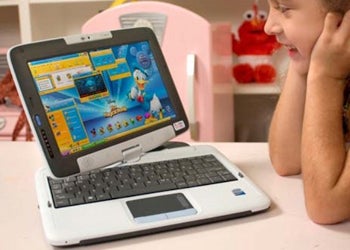
If you don't want you child messing around with your precious new computer, then you might want to look into this: PeeWee PC introduced a splash-resistant tablet PC that comes with all the adequate perks to keep your kid entertained and browse the Internet safely.

Coming in at $600, the PeeWee Pivot Tablet Laptop features a 10-inch touch screen and is powered by a 1.6-GHz Atom processor and 1GB of RAM memory, which can be upgraded to 2GB. With a 60GB hard drive, the PeeWee PC runs Windows XP, which might leave your child in a tantrum if they get stuck with some 'blue screens of death'.

The PeeWee PC is not light on additional specs either. The convertible tablet laptop has two USB 2.0 ports, a VGA port, an SD/MMC media card reader, Wi-Fi (802.11b/g) and a 1.3-megapixel webcam to fulfill you child's needs of doing anything more than drawing on a very expensive version of their paper notebook.

On the software side, PeeWee PC ships with games designed for kids ranging from pre-K to upper elementary students and a Walt Disney theme for Windows XP. In addition, it includes a specially designed security suite that allows parents to control when and how kids use the PeeWee PC. Additionally, this proprietary suite can let parents block certain Web sites, view browsing histories, and remotely control the system.

In terms of design, the PeeWee PC is quite versatile, as it can take the shape of a regular laptop or it can convert to a tablet (takes longer for your kid to get bored with it). To handle any strain or spillage, the laptop is ruggedized and the keyboard is water-resistant. PeeWee PC also has a handle at the top for easier carrying and holding and comes with a 6-cell battery pack.

PeeWee PC is available only from the manufacturer's Web site at the moment, but as an extra perk, when you spill $600 for it, your kid gets his age, name and interest custom built laptop (via the software on board).

Is it worth it? You can get a similar specifications laptop on the market right now even cheaper that PeeWee PC's retail price, but the additional cost could be covered by the ten age-targeted software titles that come with it and the durability this laptop was built in mind with (due to children's usage). I just wish I had one of these when I was a child.

Saturday, April 25, 2009

Warner Offers HD DVD Disc Bailout

For $4.95 per movie plus $6.95 shipping and handling per order ($8.95 in Hawaii, Alaska and Puerto Rico) Warner will switch your HD DVD discs for Blu Ray copies of the same movie. Warner is accepting trade-ins for 128 titles including "Batman Begins," "I Am Legend," "The Matrix," "Syriana," and "Unforgiven." If your Warner title is not on the Red2Blu list, Warner says that movie will not be eligible for trade-in.

You don't need to send in your discs, but Warner does want the cover art from your DVD with the UPC code intact. Warner is limiting the Red2Blu program to 25 titles per household with only one copy per individual title. This is also a straight-up trade movie for movie with no cross-title trading. So if you were hoping to trade in that copy of Troy for something else or you stocked up on extra copies of Batman Begins you're out of luck. Red2Blu is for U.S. residents only.

The high-definition format war ended just over a year ago, so Warner is a little late with its trade-in scheme. Best Buy and Circuit City had similar programs shortly after Toshiba's HD DVD surrendered to Sony's Blu-ray format by allowing people to trade in their HD DVD players for store credit and gift cards. This is the first trade-in program from a movie studio, but I wouldn't be surprised if the other studios come out with their own trade-in plans over the next few months.

Update: Apple Hits 1 Billion App Store Downloads

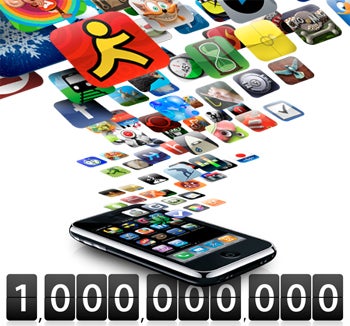
Apple Hits 1 Billion App Store DownloadsApple's App Store for iPhone and iPod Touch has served its one-billionth application, only nine months after the store opened. Last night Apple celebrated the milestone on its Web site, thanking customers for their support. The lucky App Store patron who downloaded the one billionth app will win a barrel of Apple loot from company. Apple also took the opportunity to brag about its success in the mobile ad marketplace and for driving massive amount of mobile Net traffic.

Apple started the official countdown two weeks ago to its one billionth app served. The company hasn't announced who downloaded the billionth app yet. That person will win $10,000 in iTunes credit, a 17-inch MacBook Pro, a 32GB iPod touch, and an Apple Time Capsule.

UPDATE: Apple just revealed that the winner of its billion app download contest is Connor Mulcahey from Weston, Connecticut. The 13 year-old downloaded the billionth app called Bump, a tool for swapping information such as contact details and photos.

More than 37 million devices are running Apple's mobile operating system: more than 21 million iPhones and more than 15 million iPod touches (with some 35,000 apps available in the store) according to the company. Besides driving the success of the App Store, these devices also helped Apple control 50 percent of the mobile ad market and drive the most mobile OS Internet traffic in the U.S., according to the latest market reports.

AdMob's research shows that the iPhone and iPod touch serve around 50 percent of the mobile ad requests in the U.S., followed by Research In Motion with 22 percent and Windows Mobile with 11 percent. Worldwide, Apple's handsets go neck-to-neck with Nokia's when it comes to traffic generated by smartphones. AdMob's data shows that Apple's devices drive the most traffic world wide, counting in at 38 percent.

However, despite its overall success, Apple's App store is not flawless. This week the company has come under criticism after releasing and the retracting an application which was considered by many offensive and unethical (read full story). Apple's selection process for application approval in its store also has a history of banned applications, leaving many developers unhappy with the company's decisions.

RealNetworks vs. Hollywood in DVD 'Ripping' Case Starts

RealNetworks vs. Hollywood in DVD 'Ripping' Case StartsRealNetworks and Hollywood studios are squaring off today in a U.S. District Court in San Francisco where Judge Marilyn Hall Patel will determine if the program RealDVD violates laws created to prevent the copying of DVDs that use digital-rights-management technology. RealDVD is a $30 software program that allowed you to copy DVDs onto your computer. Last year a judge halted the sale of the program.

RealNetworks maintains its RealDVD software is a convenience to consumers who can copy DVDs to a laptop for easy disc-free playback. The software, RealNetworks points out, doesn't strip any copy protection from the DVD.

Leading movie studios, represented by the Motion Pictures Association of America, counter RealNetworks software violates the terms of a licensing agreement covering the digital-rights-management protocols used by DVDs. It asserts RealDVD violates the Digital Millennium Copyright Act (DMCA) because it bypasses the copy protection built into DVDs.

Late last year seven major Hollywood studios filed a lawsuit against RealNetworks seeking a permanent ban on sales of RealDVD. The court granted lead plaintiff Universal Pictures a temporary ban on sales of RealDVD until at least this month's court proceedings. In a suit filed the same week last year RealNetworks also submitted a lawsuit to the San Francisco court seeking a declaratory judgment permitting it to sell RealDVD.

The chief concern Hollywood has with RealDVD is that the software will allow people to "rent, rip, and return" DVDs from services such as Netflix without actually paying for a movies they keep. Hollywood sees services like RealDVD as a major threat to the billions in revenue earned through DVD sales.

RealNetworks refutes the MPAA's chief complaint that it bypasses, or cracks, DVD copy protection called CSS. It also denies any violation of the DMCA because RealNetworks licenses the CSS encryption. RealNetworks adds it preserves the DVD's CSS copy protection because its RealDVD program makes an exact copy of the DVD, placing an exact image of the disc on the customer's computer hard drive -- CSS protection and all.

RealNetworks claims RealDVD was designed to maintain a DVD's copy protection with personal use and travelers in mind rather than promote piracy. And as the company rightfully points out, those who really want to rip a DVD will have to turn to illegal free software that doesn't maintain any copy protection. (See related: DVD Ripping Flourishes)

Observers point out that Hollywood has a vested interest in nipping DVD copying technology at the bud for several reasons. One reason is to protect the sales of DVDs, which was estimated at $13.45 billion last year, according to Adams Media Research. Another is to crimp technological innovation when it comes to movie distribution and sales. Hollywood's tight ownership of movie distribution chain is already being threatened by the likes of Apple's iTunes Store and Amazon that sell digital downloads of movies.

Studios have innovated and addressed its customers' cries for disc-free convenience when it comes to movies. Recently leading Hollywood studios released premium DVDs that come with a built-in digital copy that can be transferred from a DVD to a computer. The DVDs, called iTunes Digital Copy, has a catch. The digital copy of the movie can only playback on iTunes software. iTunes Digital Copy is not widely available.

Judge Patel will hear testimony from each side's witnesses today. The case is scheduled to last three days.

Thursday, April 23, 2009

Panasonic HDTVs with Viera Cast Add Amazon Video on Demand

Panasonic HDTVs with Viera Cast Add Amazon Video on Demand

Panasonic's Viera Cast-enabled HDTVs just got more interesting. Viera Cast expands its offerings today with the availability of Amazon Video on Demand on select current and future TVs. Even on last year's Viera Cast series, the Viera PZ850 (the service requires a free software update in order to register the TV with Amazon Video on Demand), will be able to access Amazon Video on Demand services. The Amazon support will be extended to Viera Cast-enabled Blu-ray Disc players, such as the DMP-BD60K.

The inclusion of such a wide-reaching service as Amazon Video on Demand builds on the forward-looking upgrade potential that televisions with Internet-based services like Viera Cast offer. It also eliminates the need for such capabilities in a separate box--one which requires its own space and cabling; currently, the compact, $100 Roku Digital Video Player delivers both Netflix and Amazon Video on Demand. Amazon currently provides more than 40,000 movies and TV shows (500 of which are in high-definition).

The Amazon service is in addition to YouTube, Picasa Web Albums, Bloomberg News, and weather information. I had mostly liked the Amazon service when I used it via the Roku Digital Video Player, and my guess is that Amazon via Panasonic HDTVs will be very similar, if not identical to, the experience through the Roku. On the Roku, once I had set up a purchase PIN via my PC, I could browse through categories for purchase or rental content; content is divided between 'Movies' and 'Television', and then further subdivided by category and availability. I scrolled through choices by moving horizontally through cover-art thumbnails of titles, and could complete my transactions directly on-screen--a boon for impulse watching. However, I found navigating among options a bit daunting, considering that I had no way of searching content from my couch.

Once you've selected a title for purchase, it goes into your Amazon Video on Demand Library, stored in the cloud on Amazon's servers. Rentals are priced at from $2 to $4 and are available for streaming via the Roku Digital Video Player, or from your PC for 24 hours from the moment you purchase a title. Purchased video costs $2 for a TV episode, up to $15 for a movie, and more for full TV seasons. An added bonus: You can access video from your Video Library for streaming playback online via a connected device or a PC, or you can download it to two locations and up to two portable devices, per Amazon's purchase terms

AT&T Gears Up for Palm Pre vs. iPhone Battle

Palm has yet to announce a launch date for its much-anticipated Pre smart phone, but the blogosphere rumor mill is expecting a mid-May debut. If true, Palm's competitors are running out of time to develop counterattack strategies to persuade current and potential customers that the Pre isn't all that.

They'd better hurry, because the Pre is bound to get oodles of free publicity upon launch, particularly if it turns out to be the iPhone killer that some industry watchers predict it will be.

It appears that AT&T Wireless, the exclusive U.S. carrier for the iPhone, isn't taking the Pre lightly. According to a report by Dieter Bohn of PreCentral.net, AT&T has sent an internal document to its employees that is essentially a pro-iPhone, anti-Pre cheat sheat. According to the document, the iPhone's advantages include:

* A metal and glass design (vs. the Pre's plastic casing)
* A slight larger screen (3.5 inches vs. the Pre's 3.1-inch display)
* Over 25,000 apps (vs. the Pre's "unproven" app store)
* Patented Multi-Touch screen (the Pre's touch screen controls are "not intuitive")
* It works overseas (the Pre lacks GSM capability and isn't a world phone)

Some good points, certainly, if a bit nit-picky in places. I doubt that many users will see a dramatic difference between the iPhone and Pre screen sizes, and it's too early to knock the intuitiveness of the Pre's touch screen -- at least until we've all had a chance to check it out. Besides, the Pre has advantages of its own, including a slide-up keyboard (but no touch-screen keyboard), a removable battery, and a slight smaller size.

While the Palm Pre may not be an iPhone killer, it's certainly shaping up to be a strong challenger. The next-gen iPhone, which could arrive as early as a month after the Pre launch, will make these head-to-head comparisons even more intriguing.

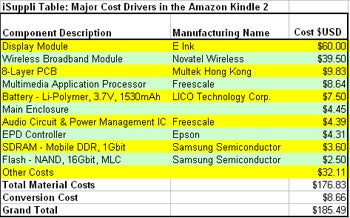
Amazon's $359 Kindle 2 Costs $185.49 to Build

Amazon's second iteration of its popular eBook reader, The Kindle, costs only $185.49 to build, $173.51 less than its retail price, according to an iSuppli Teardown report (see below). When the conversion costs -- manufacturing expenses and the battery -- are stripped away, the price inflation weighs in at more than 50 percent. So what's making the Kindle 2 so pricey?

E Ink

The Kindle's E Ink display gobbles up 41.5 percent ($60) of the materials cost, as it's the most advanced technology included in the device and also the centerpiece of the reader. Funny, given that the latest E Ink upgrades have provided users with more eye-squinting headaches than previous versions.

Wireless

The original Kindle's wireless broadband card was built into the main circuit board. The Kindle 2's connectivity module, provided by Novatel Wireless, has been divorced from the core and accounts for 27.3 percent ($39.50) of the total cost.

The Rest

iSuppli doesn't touch a variety of other Kindle 2 components that raise its price. For instance, the teardown company does not factor in software, intellectual property, licensing fees, shipping, logistics marketing, or any of the other components necessary to not only have a physical device, but a physical device that functions.
Voracious readers fear not: there still exist justifications for purchasing the Kindle 2, despite its hefty teardown price -- but only if you consume many books per month

Mozilla: Firefox 3.5 Beta 4 will Ship on Time This Week

The Mozilla Foundation says it is still on track to release Firefox 3.5 Beta 4 sometime later this week despite the lack of a firm release date. Beta 4 will likely be the last test version before Mozilla moves on to the release candidate of Firefox 3.5. However, Mozilla has not made good on many of Firefox 3.5's deadlines: earlier this year, Mozilla delayed the release of Beta 3 -- twice -- before moving on to Beta 4, as well as dumping the name Firefox 3.1 for the snappier Firefox 3.5 to reflect the significant differences between versions 3.0 and 3.5.

Most of the previous delays stemmed from Firefox's new JavaScript engine, TraceMonkey, which promises to speed up page loads two times faster than Firefox 3.0 and nine times faster than Firefox 2.0. At the moment, Beta 4 contains seven high-priority bugs requiring fixes, five of which involve the JavaScript engine.

When it is finally ready for mass adoption, Firefox 3.5 promises some new features largely based on HTML 5 -- the latest update to the core language of the World Wide Web. Mozilla says Firefox 3.5 will deliver noticeably improved performance, security and a better user experience overall. More specific features include:

* Audio and video elements that free media from being dependent on plug-ins, and give Web developers greater control over how media will appear on a Web page
* Capability to drag and drop elements within and among Websites
* Private browsing feature that prevents Firefox from recording your Web activities
* One-click deletion for specific Websites: similar to private browsing, right clicking and selecting "forget about this" for any Website in Firefox's Web history will delete all history records relating to that Website.
* Wi-Fi based geolocation (opt-in feature)
* Downloadable fonts so pages look exactly as the designer intended

While Mozilla works to resolve problems with Firefox 3.5, the foundation is also hard at work on Firefox 3.0. Today, Mozilla released Firefox 3.0.9 update with 12 security fixes -- four of which were critical. Today's update was the largest security patch for Firefox since December 2008, but the second security update in the last four weeks. In late March, Mozilla released a fix for the so-called 'zero day' flaw after a German hacker exploited the browser to help him win US$15,000 during the Pwn2Own competition at the CanSecWest conference.

Amazon Now Offers HD With On-Demand Movie Rentals

Amazon Now Offers HD With On Demand Movie Rentals

Amazon is now offering over 500 movies and TV shows in high-definition through its Video On Demand service. Major Hollywood studios and television networks have partnered with Amazon to bring recent movie releases and popular TV shows in HD to your TV--provided you have the right third-party hardware gear.

If you have a Roku digital video player, TiVo Series3, Sony Bravia Internet Video Link, an HD or HD XL DVR, or a Panasonic VIERA CAST-enabled TV, then you can rent HD movies for $3.99 to $4.99 and TV episodes purchases for $2.99 each. PC and Mac users can also get a dose of HD content through Amazon's online rental service. But only standard definition movies and TV shows in the HD format are available via your PCs.

Big-name Amazon partners include Warner Bros. Entertainment, Sony Pictures, Paramount, Metro-Goldwyn-Mayer and Universal. Some titles available include recently released movies Twilight and Yes Man and TV series The Tudors and Gossip Girl.

On TiVo, the company says, the majority of HD movies rented through Amazon's service will come with Dolby Digital 5.1 surround sound, while on Roku boxes the HD video will be streamed in 720p quality. On Roku boxes, the Amazon interface allows users to rent movies or purchase shows directly, unlike on Netflix where you have to manage your viewing queue from a PC.

Faster Bluetooth 3.0 Launches with WiFi Twist

Faster Bluetooth 3.0 Launches with WiFi Twist

The Bluetooth Special Interest Group today officially launched Bluetooth 3.0 with some big claims for the short-range wireless standard. The biggest improvement for the new standard is speed, which jumps from a top transfer rate of 3 Mbps found in the current Bluetooth standard to 24 Mbps in 3.0, according to the Bluetooth SIG. Faster speeds are accomplished because 3.0 employs the 802.11 radio protocol--basically allowing the Bluetooth protocol to piggyback on a Wi-Fi signal when transferring large amounts of data like videos, music and photos.

However, laboratory tested speeds don't always work out as advertised when used in everyday scenarios. Nevertheless, in an e-mail interview Michael Foley, executive director of the Bluetooth SIG, stands behind the speed claims adding that the average user will experience transfer rates between 22-26 Mbps with 3.0. This is a great advantage for devices that use an ad hoc connection, because it means you can transfer data between two devices at high speed without using a USB cable or logging on to a Wi-Fi network.

Other new and notable Bluetooth features include Unicast Connectionless Data giving 3.0 devices improved responsiveness and noticeably better battery life; and Enhanced Power Control which reduces the incidence of disconnects caused by movement such as placing a phone in pocket or purse.

From its All-Hands Meeting in Tokyo today, the Bluetooth SIG said manufacturers Atheros, Broadcom and CSR are already shipping 3.0 computer chips to device manufacturers and 3.0-enabled gadgets should be on store shelves within the next 9-12 months. There's no word yet on what devices will be the first to benefit from the faster Bluetooth speeds. But Foley says he's seen interest from computer and cellular phone makers, and even Television manufacturers.

While it's pretty much a given that computers and mobile phones will employ the new standard, TV makers are not a part of the typical Bluetooth crowd making it interesting to see if any TV makers adopt Bluetooth into their sets. If they did, it wouldn't be the first time TV makers had flirted with Bluetooth. As recently as last summer, LG Electronics announced its 7000-series of LCD and Plasma televisions would let you use wireless headphones via Bluetooth. Wireless headphones are one of the more common uses for Bluetooth, but with the faster transfer rates television manufacturers may find more interesting uses for 3.0.

With faster speeds, Bluetooth 3.0 promises to help increase adoption among users and manufacturers; however 3.0 also faces competition from an emerging short-range standard: Wireless USB. Using ultrawideband (UWB) technology, Wireless USB claims blazing fast speeds of up to 480Mbps between two devices within ten feet of each other.

Yet there is a possibility that Bluetooth could adopt UWB since the technology's guardian, the WiMedia Alliance, last month transferred the specifications for the UWB radio to the Bluetooth SIG and the Wireless USB Promoter Group. "Should UWB prove viable," Foley said. "It could be considered for a version of Bluetooth technology down the road, but at this point it's too early to tell."

For the moment, Bluetooth has staked its future on the more familiar 802.11 protocol, and you can be sure that PC World will put Foley's speed claims to the test once 3.0 devices become available.

Tuesday, April 21, 2009

Adobe’s Flash Technology Headed to HDTVs

HDTVs to get Adobe FlashComing soon to a TV screen near you - Flash. Adobe says it is working to bring its Flash technology to Net-connected TVs that will be able to playback videos and offer Web-like interactivity. Adobe announced its push into home theater devices including HDTVs, set-top boxes, and Blu-ray players on Monday.

The company says it has forged a partnership with Intel and set-top box manufacturers. It also says it has partnered with content and cable companies such as Disney, Netflix, Comcast, and The New York Times. The first TVs to include Flash technology that Adobe is working to develop are expected to show up on retail shelves next year, Adobe says.

Flash interactivity has actually already made it to HDTVs from LG, Samsung, Sony, and Vizio in form of Yahoo Widgets. PC World spotted many HDTV models at this past Consumer Electronics Show sporting Yahoo Widgets. Yahoo has touted partnerships with hardware and content partners such as Intel, Netflix, and Google's YouTube division.

I love the idea of having Flash-based video (Hulu and YouTube) accessible through my TV without having to use third-party hardware such as a set-top-box. My fingers are crossed the Flash technology won't be tweaked to deliver pop-up ads, annoying interstitial ads, and contextually relevant Google banner ads while watching primetime TV from my couch.

What's next for Adobe to concur after invading our PCs and HDTVs?

Adobe is slowly penetrating the mobile phone market also, with a slimmed-down version of the Flash player already available for various smartphones. Apple iPhone and iPod Touch devices are next expected to get flash video capabilities, together with Google Android phones.

Is Windows 7 for Netbooks a Non-Starter?

Microsoft plans to offer a netbook-friendly version of Windows 7 that can only run three programs at a time and has a less robust graphical interface than the complete version of Windows 7.

Called Starter, Microsoft plans to offer the low powered OS as a viable competitor in the netbook market, while also giving netbook customers the option to upgrade to a complete version of Windows 7 if they want to.

Microsoft is desperate for Windows to remain the netbook OS of choice after it began to compete seriously with Linux -- an early favorite for netbooks -- at the outset of 2009. This is important since netbooks are expected to be the most popular devices among consumers in the coming months. In fact, the market research firm Gartner expects netbooks will grow by 81 percent this year, and credits the compact units for keeping PC shipments growing in some markets (notably Europe).

While Microsoft may be pinning its hopes to Windows 7, it's not clear how users will react to a limited OS like Starter. First of all, if Starter can run only three programs in practice doesn't that really mean you can only keep two applications open plus an antivirus program? That may make Windows 7 for netbooks a 'non-Starter' right there. Also, some users may see switching over to Windows 7 Starter from XP as a downgrade since a netbook running XP is only limited to what it can do by the computer's processing power. But more importantly, Windows -- while still the dominant OS overall -- is not the only user-friendly system you can find at an affordable price. Every year, Linux becomes more attractive to the average user and is expected to improve even more over time.

There are also reports that Google's Android OS may jump to the netbook from the smart phone, meaning even greater choice for users. To be a viable competitor, then, Windows 7 Starter will have to be a very compelling operating system. Not only that, but I expect many of you netbook customers out there would be unwilling to upgrade to a more complete version of Windows 7 -- depending on the price tag, of course.

Then again, while Windows 7 Starter may be less attractive because it can run only three programs at a time, a more complete version may not be necessary for a netbook. Consider my own situation: As I'm writing this, I am running iTunes, an instant messaging program, Firefox, and Gmail Notifier. Yet I could choose to run every single one of these functions through my Web browser.

In fact, I'm already moving away from my desktop and into the cloud since I'm writing this post on Google Docs and keeping up on Twitter with the TwitterFox browser add-on. All I'd need to do is stream my music through a service like LaLa or Project Playlist; run my IM through Meebo; and keep my Gmail tab open and I'd achieve the same results I have now while using only one program. Of course, if you plan to use your netbook as your primary computer, then a limited OS like Windows 7 may not work; but as a secondary device, a netbook loaded with Starter and a high-speed Internet connection may be all you need.

First Look: Sharp's Solar-Powered Cell Phone

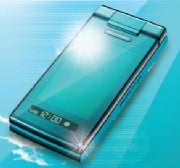
Cell phone addicts, listen up: The dreaded low-battery beep may soon be a thing of the past. Sharp has just unveiled the world's first solar-powered cell phone. Ready to get charged?

The phone, created by Sharp and Japanese network KDDI, is set to be released this summer. It works by using a special solar panel that snaps onto the device and soaks up the sun's rays. The companies say 10 minutes in the sun will give you enough juice for about a minute of talk time, or two full hours of standby power.

Even better for the tech-obsessed: Both the solar panel and the phone are fully waterproof. Conducting business poolside has never been simpler.

Other cell phone vendors are showing prototypes of solar-powered cell phones, and a number of solar chargers are avaiable for various electronics, including cell phones. But Sharp -- which has committed to solar power plants -- appears to be the first out of the gate with a solar-powered cell phone.

Unfortunately, the phones are only being released in Japan thus far, and there's no word yet when they could make their way to the States. The minute they do, though, consider my office officially relocated to the giant gator-shaped raft floating in the deep end.

Refurbished iPhone 3G for $149: Smells Like a Fire Sale

Out with the old iPhone, in with the new?

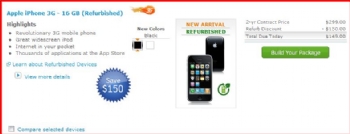
So it appears at the AT&T Wireless site, where a refurbished 16GB iPhone 3G is now selling for a suspiciously low $149 -- a 50 percent discount off the $299 regular price. True, it’s a refurb, which means it may have a scratch or two, and its warranty period is most likely a mere 90 days. You’ll have to sign a two-year contract too.

But even with those minor caveats, that’s a damn good price for a 16GB iPhone 3G. And the fire-sale price is certainly another indication of Apple’s efforts to clear out inventory to make way for the next-generation iPhone, which is rumored to debut as early as June.

Of course, pre-owned iPhones (“used” is such an ugly term, just as with cars) have been available for a few months now. AT&T in December began selling refurbished 8GB models for just $99, and Best Buy in January launched a somewhat pricier deal: $149 for a “refreshed” 8GB iPhone 3G; and $249 for the 16GB version.
The question for iPhone shoppers: Is it smarter to snag a bargain now, or what to see what goodies ? And if you go with the 3G now, what will it cost to upgrade to the latest handset?

AT&T Plans to Double 3G Speeds

AT&T is doubling the download capacity of its HSPA 3G network just before a new iPhone device is expected to launch. The new speeds take AT&T's capacity from 3.6 Mbps to 7.2 Mbps for 3G devices. Called HSPA+, the tweaked network is currently in two test markets and will roll out across the country later this year, according to Telephony Online.

The news of increased 3G capacity from AT&T comes less than two months before Apple plans to launch the third iPhone operating system at the World Wide Developer's Conference in San Francisco. Apple is already testing iPhone devices on HSPA+, according to reports, and the faster AT&T service could arrive as soon as May 31. That's just in time for WWDC where Apple is widely expected to launch a brand new iPhone device. A new iPhone would undoubtedly send another deluge of customers towards AT&T's service, and the company is loath to repeat the problems reported when iPhone 3G first launched last summer. Instead, AT&T would be better off to have noticeable speed improvements ready just as it did when the original iPhone launched on the AT&T EDGE network in 2007.

While the iPhone figures prominently in AT&T's plans, the mobile carrier also wants to open up 3G access to a wider range of products. At the CTIA Wireless conference last month, AT&T said it was looking at a wide range of 3G devices like eReaders, digital cameras, and of course netbooks embedded with 3G chips. AT&T could shake up its subscription plans as well and is considering models like a pay-per-upload scheme for digital cameras users. That would give you a more attractive way to take advantage of online photo storage and social networking straight from your camera without paying a monthly fee.

IPhone users and owners of other 3G devices will no doubt welcome the increased speed on AT&T's 3G network, but the AT&T network actually has the potential to go as high as 14.4 Mbps. However, Scott McElroy, vice president of AT&T Mobility, says it's unlikely customers will ever see those speeds on the 3G network. That's partially because AT&T has already spent a lot of development time on HSPA+, but AT&T also wants to begin testing its 4G network in test markets by 2010. McElroy told Telephony Online there's little point in migrating to 14.4 Mbps if AT&T can go straight to 21 Mbps.

Sunday, April 19, 2009

Cheap Blu-Ray Players to Hit U.S. Shelves

The average selling price of Blu-ray players has been falling steadily -- it's now about $200 -- and there's little doubt that prices will keep dropping as Blu-ray goes mainstream and player shipments increase. But one report says the average price for entry-level Blu-ray players may to drop to as little as $99 in the very near future.

According to a Blu-ray.com report, Chinese manufacturers are preparing to enter the market for the high-definition video players, and this development could mean very aggressive prices for low-end Blu-ray hardware. The Blu-ray Disc Association recently began licensing Blu-ray technology in China, a move that has led Samsung marketing director Mark Leathan to speculate that $99 players aren't far off, the report states.

Does this mean we'll see a wide selection of sub-$100 Blu-ray players this holiday shopping season? That sounded a big optimistic, so we sought the advice of NPD Group industry analyst Stephen Baker, who's also skeptical at this point.

"Black Friday, maybe. It's entirely possible you could see a few players down at that price level," says Baker, who adds that it's a little early to speculate about holiday prices. The industry will have a better idea of holiday pricing by mid-summer.

Another issue is just how stripped down those entry-level Blu-ray players might be. Sure, they'll play discs, but what about the latest bells and whistles? Will they have BD-Live, also known as Blu-ray Disc Profile 2.0, which supports Ethernet connectivity, storage, and interactive features? Will they offer high-end audio decoders or Internet streaming via content providers such as Netflix, CinemaNow, Pandora, and YouTube to your HDTV?

It's unlikely that established players such as Panasonic, Samsung, and Sony will sell sub-$100 Blu-ray players, but rather they'll leave the low end to the Chinese upstarts and other value-sector brands like Magnavox and Sylvania, the Blu-ray.com report says.

YouTube Adds Movies and Shows, Goes After Hulu

youtube now offers shows and movies from major hollywood studios

Google took the wraps off a partnership with Hollywood studios bringing movies and TV shows to U.S. consumers via its YouTube video network. Some of the big-named partners inking a deal with YouTube are Sony, CBS, Metro-Goldwyn-Mayer, BBC, and independent film studio Lions Gate Entertainment. Each agreed to showcase some of its catalog content on the Google-owned video site.

Separated from the plethora of user-generated videos, the shows and movies are situated in a dedicated Shows section on YouTube, available from the main page. The content offered will be free to view but it is supported by ads -- the revenue being shared with content owners.

YouTube's move to premium content comes to counter the ever-growing popularity of sites like Hulu, which freely offer movies and TV shows for viewing. However, most of the studio movies and shows added on YouTube are more than a decade old (Fantasy Island, Alf, Party of Five), while NBC-owned Hulu offers most of the new shows just a few days after they air on TV.

Google is hoping that these full-length movies and video will help YouTube salvage through advertising revenue some of the over $500 million some predict it loses yearly on bandwidth costs. Google TV Ads, also introduced yesterday, will place commercials into the ad breaks of TV programs watched online (the ads cannot be skipped).

According to measurement firm Nielsen, YouTube accounts for two-thirds of all video views in the U.S., and last month the site had over 90 million visitors according to comScore.

If Blu-ray Is Dying, Why Are Disc Sales Soaring?

Artwork: Chip Taylor
Will Blu-ray finally get some respect? The high-definition optical disc format has long been the whipping boy of media pundits, many of whom predict consumers will spurn Blu-ray and gravitate instead toward video-on-demand, online download, and movie streaming services. Blu-ray is old school, they say, a relic of the bygone era of physical media, despite the fact that it bested challenger HD DVD in 2008 after a two-year high-def format war.

But don't nail Blu-ray's coffin shut just yet. A new study from Adams Media Research shows that sales of Blu-ray discs in the first quarter of 2009 nearly doubled compared to the same period a year ago, rising to nearly 9 million from 4.8 million in Q1 2008. Sales soared even though Blu-ray players and discs remain pricier than their DVD counterparts, although Hollywood studios have wisely begun to slash prices of some Blu-ray titles.

Does this mean Blu-ray has a future after all? It certainly appears so. Lower prices may be helping. Many Blu-ray players are now under $200, and Blu-ray movies sell for a little as $10. The HD format displays a prettier picture -- albeit not dramatically so -- than the HD content delivered by video-on-demand and online movie download and streaming services.

Consumer adoption of HDTV is certainly helping Blu-ray, although many users may never upgrade from DVD, or else they'll opt for a less expensive DVD player that upconverts DVD movies to HD quality. Or, as some believe, they'll simply ditch the discs altogether. But if they abandon movies-on-disc, much as they've already abandoned audio CDs, what explains the dramatic increase in Blu-ray disc sales?

This year should show whether Blu-ray's got staying power, or whether it'll die off like HD DVD.

Wall Street Journal Content Now Free Via iPhone App

The Wall Street Journal has jumped on the mobile content bandwagon and released an application for the iPhone. The financial newspaper set the price point at free -- ironic, given that the Journal's online content comes at a price of $103 per year, or $140 for the print edition.
The application looks and feels a lot like The New York Times iPhone app , replete with screen-hogging advertisements; headlines; editor's picks; and browsing capabilities for the newspaper's various categories. The WSJ app also offers video and radio sections, adding multimedia the Times does not have.

Blackberry received its free Wall Street Journal app last August, so the arrival of a similar app for the iPhone should come as no surprise. But why would a paid subscription-based online newspaper hand away its content for free?

When the current battle between the Associated Press and news aggregators such as Google is taken into consideration, the decision to release free content gets a little stranger. Obviously, it's in the Journal's best interests to collect as much dough for its content as possible, especially since newspapers are dying and the world is turning its attentions to online news. And Robert Thomson, the editor of the Journal, recently called free news aggregators "parasites or tech tapeworms in the intestines of the internet" -- which is particularly hilarious given that the Wall Street Journal is now one of those parasites.

Still, a newspaper that deals almost exclusively with finance should know when to charge and when to give away, and the Wall Street Journal likely does not see its iPhone and Blackberry apps as damaging to wsj.com.

SlingPlayer for iPhone: Another One Bites The Dust?

SlingPlayer appears to be the latest victim in the never-ending saga of iPhone apps banned from the App Store. Reports this morning say that, at AT&T's request, Apple has made an executive decision to stop SlingPlayer from getting into the Apple App Store.

SlingPlayer for iPhone, introduced in January at Macworld Expo, conformed to Apple's guidelines for user interface. But with the iPhone crowd already clogging AT&T's data network, BoyGenius reports that the wireless carrier asked Apple to reject the SlingPlayer for iPhone application from its store.

Sling representatives say they had no word from Apple yet on the status of their iPhone app, and their Website still mentions they've "submitted the first release of our application to the iPhone App Store."

If AT&T actually asked Apple not to approve SlingPlayer for iPhone because of the potential use of large amounts of bandwidth, then the app might have to take the same route as Skype for iPhone, which allows placing calls only via Wi-Fi. If a modified version of SlingPlayer will allow viewing only through Wi-Fi, then it might actually make it in the App Store.

Meanwhile, another possible reason for SlingPlayer's ban from the App Store could be AT&T's speculated plans for its own mobile video services. The wireless carrier silently changed its terms of service at the end of March, basically prohibiting services like Sling is offering from its network.

But if AT&T won't get to keep its exclusivity with the iPhone, maybe this kind of won't happen anymore. That would allow users a bit more freedom with which apps they can get on their phone and how they actually use their (already capped) mobile Internet.

Wednesday, April 15, 2009

Will the Nettop Kill the Traditional Desktop?

will all-in-one desktops kill the tradition desktop?Sales of desktop PCs have been declining for some time now. In fact, notebooks now outsell their deskbound brethren worldwide. This trend isn't surprising, given the convenience, portability and growing affordability of portable PCs. Add to that the rapid ascension of the netbook, with its even smaller dimensions and prices, and shoppers are finding fewer reasons to purchase a bulky desktop unless they crave the ultimate in speed and storage.

But the recent reinvention of the all-in-one desktop, or nettop, may "reinvigorate and redefine" the traditional PC, according to market researcher DisplaySearch. While the all-in-one desktop with a flat-panel LCD screen (AIO LCD PC) has been around for years, computer buyers haven't exactly embraced the concept. In fact, all-in-ones have account for just 2% of the total desktop display market in any given year, according to DisplaySearch.

So why the sudden AIO bullishness? Because the new nettop PC melds the advantages of the hot netbook category-low price, slim design, and a relatively small footprint-with the ergonomically friendly (i.e., desktop) benefits of a larger LCD display and a full-size keyboard. Some nettops may include touch screens too.

As a result, the nettop is convenient for the cramped office cubicle, tiny home office, or student desk. Says DisplaySearch: "Based on the Intel® Atom processor microarchitecture, which helped to launch the mini-note category, nettops are expected to be a far cry from the existing AIO LCD PCs, which are typically feature-rich and high priced."

Affordability is key here. A nettop with a 18-5-inch LCD costs as little as $240 to $250 to build, and could sell for as little as $300 in some global markets, although a street price of $400 to $500 is probably more realistic, DisplaySearch estimates. Those low prices could boost all-in-one PC shipments (including nettops) to more than 6 million units worldwide this year, up from 3.5 million in 2008.

The nettop and netbook probably won't attract the same shopper. The netbook buyer is intrigued by the concept of anytime-anywhere computing, and is willing to sacrifice screen and keyboard size for convenience. The nettop buyer wants an inexpensive desktop experience without the bulk of a traditional tower PC. Performance may prove disappointing, however, particularly if nettop fans decide to try more than basic web browsing and word processing.

Even if conventional desktops survive, the trend toward cheaper, smaller computers is bound to continue.

New iPhone 3.0 Beta Software Brings More Improvements

Apple released last night a third beta build of the iPhone 3.0 software, taking developers one step closer to the final release in June. Arriving exactly two weeks after the previous build, the iPhone 3.0 third beta software build brings speed improvements and plenty of under-the-hood goodies.

One of the most significant additions to the latest beta of the iPhone 3.0 software is the way individual apps will be able to notify users of updates or additional content. At the moment, individual apps flag users only in iTunes of new events, but with the 3.0 build, they will be able to do so right on the phone via badge, text or sound notifications.

Developers are also reporting further improvements in the latest beta carrying the 7A280f build number: Spotlight (phone-wide search) will now let users save the last search they made, and can set restrictions for inside-application purchases and location data.

An interesting fact about the third beta of the iPhone 3.0 software is that the Skype app no longer works on 3G. With previous builds, Skype allowed 3.0 beta software users to place calls via 3G, unlike the same app on the current 2.2 platform, which can make calls only over Wi-Fi. Apple seems to have fixed this "bug," so no more wishful thinking for cheap VoIP in the 3.0 final release.

This third beta of the iPhone 3.0 software indicates the imminent arrival of a final 3.0 software in June, just like Apple promised. However, the question remains whether we will get some new iPhone hardware as well, especially as rumors intensified over the last weeks, detailing hardware components and features.